Higher Education Innovation Ecosystem LatinAmerica and Europe: Self Assessment and Development Plans
Published 31 March 2026
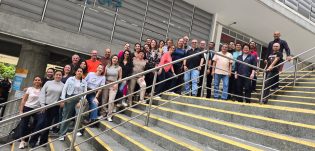
Photo by: Embrace Team
This study examines how higher education institutions in Latin America and Europe assess and develop innovation ecosystems through participatory self-assessment. Findings reveal shared challenges, contextual differences, and strategic priorities, highlighting universities’ evolving role as key drivers of collaboration, inclusion, and sustainable innovation in complex educational and societal environments.
Authors: Inês Barbedo, Vera Ferro-Lebres, Marja Laurikainen, Luís Pais
This study explores how higher education institutions (HEIs) in Finland, Portugal, Colombia, and Brazil assess and strengthen their innovation ecosystems within the framework of the EMBRACE project. Innovation ecosystems are understood as dynamic, multi-actor systems that foster knowledge creation, collaboration, and societal impact, positioning universities as key drivers of regional development and sustainable transformation.
The research adopts a qualitative, participatory multi-case approach involving seven HEIs. Through structured self-assessment workshops, institutions evaluated their ecosystem maturity using a shared framework based on ten dimensions, including governance, data systems, partnerships, funding, equity, and innovation culture. The process combined individual reflection, collaborative discussions, and co-creation of development plans, supported by tools such as the Ecosystem Self-Assessment Workbook and visual mapping techniques.
Findings reveal that HEIs are actively engaged in connecting education, research, and professional practice through partnerships with industry, government, and society. These collaborations support teacher training, student employability, applied research, and regional development. However, several shared challenges were identified across institutions. These include fragmented and short-term partnerships, limited data integration for decision-making, unstable funding models, and the need to strengthen institutional cultures of innovation.
The comparative analysis highlights important contextual differences. European institutions tend to exhibit stronger alignment with formal policy frameworks and structured governance models, particularly in relation to regional innovation strategies. In contrast, Latin American institutions demonstrate greater emphasis on social engagement, inclusion, and responsiveness to local challenges, often relying on more flexible and informal collaboration practices.
Despite these differences, common strategic priorities emerged. These include the need to build long-term partnerships, improve data-driven governance, foster innovation culture, expand lifelong learning opportunities, and embed equity and inclusion into ecosystem design. The study also identifies two main ecosystem models: policy-aligned ecosystems (typical in Europe) and socially embedded ecosystems (common in Latin America), with a hybrid model proposed as a desirable future direction.
An important outcome of the project is the increased awareness among participants of ecosystem thinking and the role of HEIs as facilitators of collaboration and innovation. However, the study also notes gaps between conceptual understanding and practical implementation, as well as limitations related to self-reported data, small sample sizes, and the lack of longitudinal analysis.
Overall, the research demonstrates that participatory self-assessment and collaborative learning processes are effective tools for institutional reflection and strategic planning. By combining theoretical frameworks with practical methodologies, the study contributes to a deeper understanding of how HEIs can enhance their role in innovation ecosystems and respond to complex societal challenges through inclusive, sustainable, and context-sensitive approaches.
This is just a summary of the self-evaluation document and development plans. You can read the complete document in the following resource.