The detected short-term impact of the EMBRACE project
Published 30 March 2026
Photo by: Embrace Team
The EMBRACE project demonstrates significant impact in digital transformation, teacher competence development, and institutional collaboration. Using a mixed-methods evaluation, it reveals systemic change across partner institutions, strengthening governance, learning ecosystems, and international cooperation, while generating measurable socio-institutional value and fostering sustainable innovation in higher education.
Authors: IPB, UFABC.
The EMBRACE project has facilitated significant institutional growth, digital transformation, and international collaboration across its partner institutions. The quality and impact evaluation has been done throughout the project in the critical phases (at the beginning of the project, at the end of Work Package 2, at the end of the whole project) according to the criteria and evaluation dimensions (see Figure 1 below) indicated in the Deliverable D1.2 Quality Plan. The evaluation process has been designed, led, and analyzed by the Quality Manager and his team at UFABC.
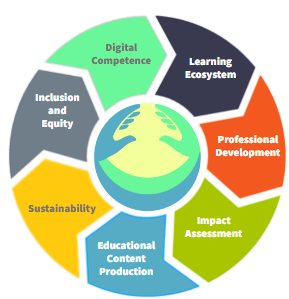
Figure 1. Quality evaluation dimensions from the Quality Plan (illustration done by UFABC)
The quality and impact evaluation of the EMBRACE project was conducted between May 2023 and February 2026, and the Final analysis of the results utilized a theory-informed, mixed-methods approach to assess impact across five Working Packages (WPs).
Quality Evaluation Methods
The project employed a four-layer analytical framework to ensure scientific triangulation and internal validity in data collection (see Figure 2 below):
- Quantitative Statistical Analysis: Used Likert-scale surveys processed via R and Alteryx to measure the intensity and stability of perceptions.
- Qualitative Content Analysis (Bardin): Identified categories of institutional learning and saturation of operational practices.
- Qualitative Discourse Analysis (Foucault): Examined “regimes of truth” and how the project reshaped professional identities and institutional power relations.
- AI-assisted Analysis: Acted as a confirmatory layer to detect semantic regularities and reduce analyst bias after human coding was completed.
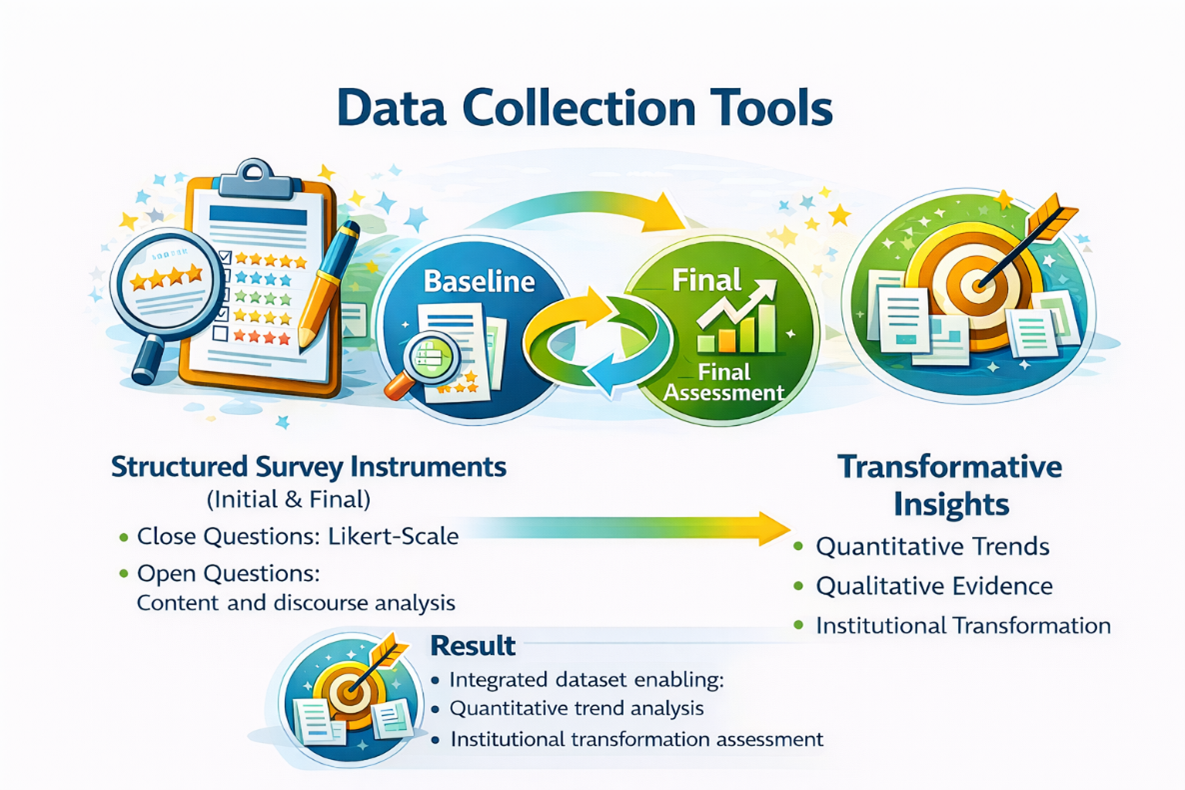
Figure 2. Data collection tools (illustration done by UFABC)
These methods were integrated into broader evaluative strategies, including Contribution Analysis, Realist Evaluation (CMO), an Institutionalization Index, Network Analysis, and Social Return on Investment (SROI).
Overall Project Impact
The EMBRACE project transitioned partner institutions from fragmented digital initiatives to integrated digital education ecosystems.
- Socio-Institutional Value: The SROI model estimates that the project generated €3.8 to €4.6 of value for every €1 invested, with WP2 (human capital) being the largest value driver.
- Systemic Transformation: At its highest level (Level 4 of the Impact Pyramid), the project achieved cultural normalization, where digital innovation, quality assurance, and accountability are now internalized as permanent institutional missions rather than temporary project goals.
- Cross-Border Synergy: The project successfully leveraged asymmetries, with Finnish and Portuguese partners acting as methodological benchmarks for Brazilian and Colombian institutions.
Despite limitations such as a reliance on self-reported data and the lack of a control group, the evaluation concludes that EMBRACE plausibly and substantially contributed to a lasting cultural shift in how partner universities approach digital higher education.
Impact by Work Package
The evaluation identified distinct roles and impacts for each work package, synthesized in a “Master Impact Dashboard”:
- WP1: Management and Quality Assurance (Structural Anchor): Consistently showed high satisfaction (88% agreement on communication effectiveness). It evolved from procedural coordination into a consolidated governance routine, shifting the institutional mindset from “coordination as a problem” to “coordination as governance“. Moreover, the quality culture was internalized in the partner institutions.
- WP2: Teachers’ Digital Competences (Transformation Engine): This was the project’s strongest individual-level impact axis and the Engine of Transformation (Digital Competences). Digital competence proficiency increased with 92%, and for VLE development rose from 75% to over 90%. Teachers shifted their identity from “users of tools” to “designers of learning environments“.
- WP3: Educational Management (Strategic Incubator): Characterized as a “delayed-impact axis,” it showed lower immediate tangible results but high strategic value. It provided “transformation literacy,” helping managers to be sensitized to their role in institutional change and to learn from different international governance systems, even when immediate structural reforms were constrained by local bureaucracy. Structural change ongoing.
- WP4: Education-Industry Collaboration (Ecosystem Integrator): Strengthened ecosystem effects through applied learning bridges and partnerships (84% effectiveness). It successfully expanded the learning network beyond academia, increasing student employability by 88%.
- WP5: Impact and Dissemination (Visibility Enabler): Achieved high dissemination performance (81% effectiveness) and 100% compliance with Open Access. Partners shifted the mindset from “dissemination as a task” to “dissemination as an institutional responsibility“. However, its long-term sustainability is considered conditional, depending heavily on post-project governance and resources.
Impact on partner institutions
The EMBRACE project achieved measurable results across all partner institutions, as evidenced by the indicative numbers presented in the partner institutions’ impact presentations during the EMBRACE Final Seminar on 27 February 2026 in São Paulo, Brazil. The data table below highlights these specific quantitative impacts:
| Partner Institution | Main Impacts and Indicative Numbers |
| Federal University of ABC (UFABC) | Capacity Building: 22 staff members participated in MOOC pilots, and another 22 staff underwent innovative pedagogy training, representing 9 out of 34 undergraduate programs. Strategic Engagement: 110 invitations were sent to undergraduate coordinators for manager sensitization, resulting in 9 core managers attending intensive workshops. Direct Learning Impact: 60 students engaged in real-world experiences with 10 professionals from 6 external partners. Networking: Established 4 new international agreements and carried out 21 dissemination activities. |
| Instituto Federal do Espírito Santo (Ifes) | Digital Transformation: Trained 43 professors in digital pedagogical competence and developed 3 trilingual MOOCs (Portuguese, English, Spanish). World of Work Connections: Two major “Connection” events involved 15 engineers from Vale and 6 representatives from Unimed, engaging a total of 49 professors and 19 students from multiple campuses. Research Output: Produced 8 web articles and organized 3 major events. |
| Instituto Federal de São Paulo (IFSP) | Student Engagement: 250 students participated in co-creation projects using student-centred and competence-based learning methods aimed at reducing drop-outs. Institutional Scaling: Disseminated industry-HEI models to over 100 institutions nationally through the CONIF and ABED networks. |
| Universidad Tecnológica de Pereira (UTP) | Faculty Upskilling: Approximately 30 professors strengthened their digital and pedagogical skills through MOOC piloting and received over 150 hours of guidance. Local Impact: Practical AI applications through “SinergIA” electives directly impacted major local entities, including Frisby and regional hospitals. |
| Polytechnic Institute of Bragança (IPB) | Ecosystem Internationalisation: Hosted visiting delegations from 3 partner institutions (UTP, Areandina, and Ifes) and 2 visiting professors from IFSP and UTP. Collaborative Research: Launched 1 joint research project with Areandina and established an internship agreement for world-of-work cooperation. |
| Areandina | Resource Development: Created 8 trilingual infographics (Business Relationships, Computational Thinking, etc.) to support digital education. International Research: Participated in delegation visits to IPB and collaborated on 1 joint research project. |
| Häme University of Applied Sciences (HAMK) | Knowledge Sharing: Published 2 research papers in the HAMK Unlimited Journal detailing professional learning communities and the development of culturally relevant MOOCs. Pedagogical Integration: Plans to integrate EMBRACE MOOCs and digital badges into HAMK’s existing pedagogical programs, especially in the context of Global teacher training projects. |
Table 1. Impact on partner institutions
These figures demonstrate how the project transitioned from initial theoretical frameworks to practical applications that directly affected hundreds of students, faculty members, and external professional partners across four countries. Please find each partner institutions’ impact presentations from the EMBRACE Final Seminar here. In addition to these specific institutional outcomes, the project facilitated a broader transnational network, enabling the sharing of best practices in university management, digital education, and strengthened connections between academia and the global world of work. Moreover, through the network partners have already initiated several new projects, mobilities, joint programs and other collaboration activities.